
Colombia: A Partnership Years in the Making
By: Justin Powell
This July, Youthlinc will take its first team to Colombia, but this story didn’t begin this year. It began with relationship.
Over the past several years, Youthlinc has had the privilege of hosting three extraordinary Colombian leaders through the U.S. State Department’s Young Leaders of the Americas Initiative (YLAI): Sebastián, María, and most recently, Juan Pablo. Each fellow left a lasting imprint on our organization, and each helped lay the groundwork for what is now becoming one of our most innovative international partnerships.
María worked with us for a full year, integrating her Life Academy mental health curriculum into our Service Year program. Her work strengthened how we think about resilience, leadership, and emotional well-being — not just as add-ons, but as core to humanitarian development. In 2023, Justin was awarded a U.S. State Department grant to visit María in Colombia and deepen that partnership.
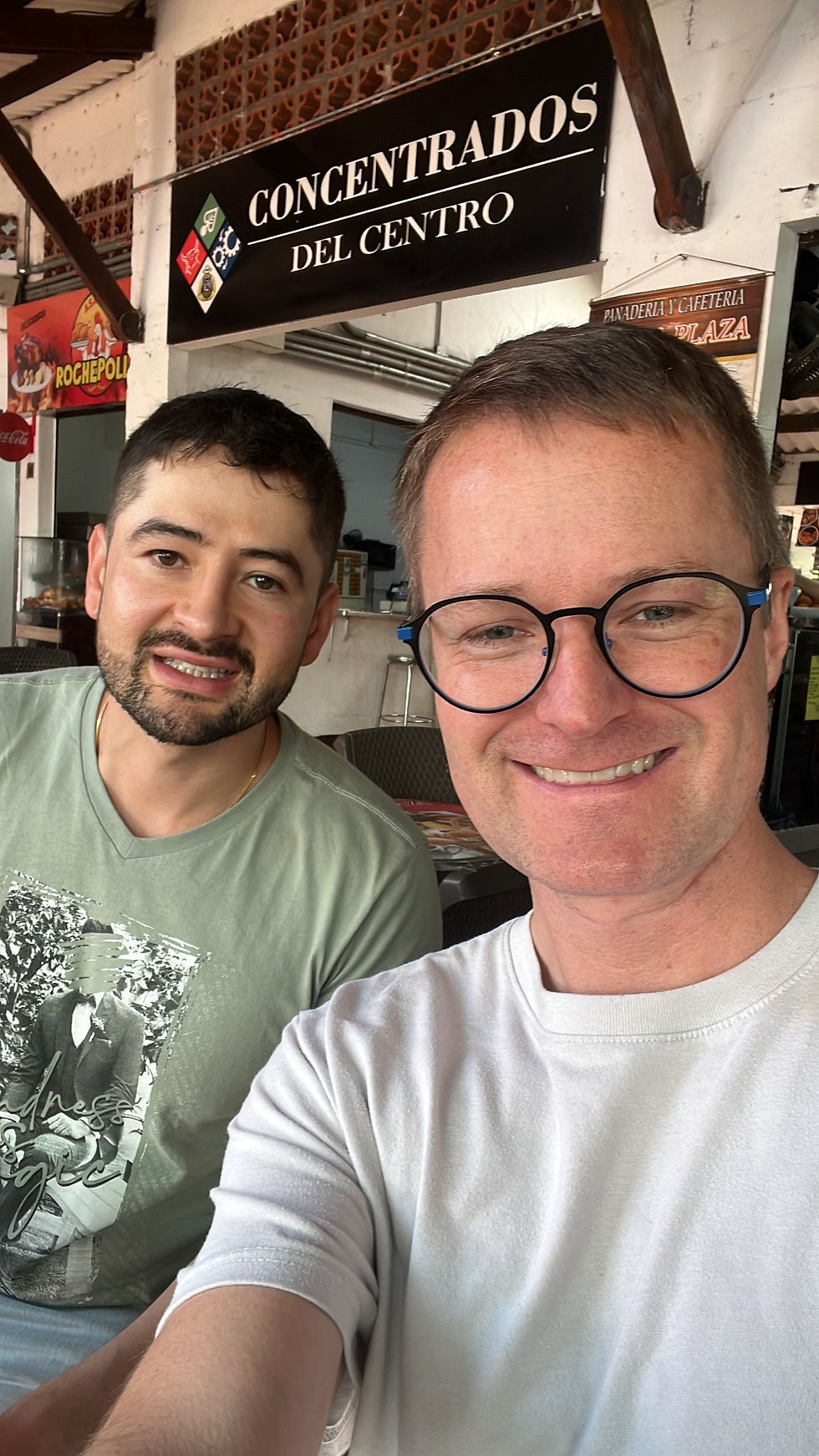
Two years later, in 2025, another State Department grant made it possible to visit Juan Pablo in Manizales. That visit confirmed what had been growing quietly for years: Colombia was ready to become a Youthlinc site, not because we were looking for a new location, but because the relationships and the work made sense.

From Research to Real-World Impact
Juan Pablo is a PhD researcher whose work centers on black soldier fly larvae, a deceptively simple organism with extraordinary potential.
Here’s what makes it powerful: the larvae consume organic waste. Depending on what they eat, they transform that waste into high-quality protein and nutrient-rich byproducts. In practical terms, this means communities can turn agricultural waste into livestock feed and natural fertilizer, creating closed-loop, regenerative systems.
In Indigenous mountain villages outside of Manizales, larvae greenhouses are being integrated into daily life. Organic waste from the community feeds the larvae. The larvae become protein-rich feed for chickens. The chickens grow healthier and produce strong, nutritious eggs and meat. Malnutrition decreases. Families rely less on outside suppliers. A circular economy begins to take shape, one that's rooted in dignity and local capacity.
Juan Pablo’s work doesn’t stop there.
He collaborates with coffee farmers including producers connected to Juan Valdez Coffee to process coffee pulp waste into inputs that enrich soil and improve long-term crop health. Instead of waste sitting in piles and creating environmental strain, it becomes part of a regenerative agricultural cycle.
He also partners with a local rum manufacturer to address organic byproducts from the distillation process. What once accumulated as large-scale waste is now being transformed into more natural fertilizer and environmentally responsible outputs. It’s environmental stewardship aligned with economic viability.
This is the ecosystem our Youthlinc team will step into — not as saviors, but as learners and partners.
Santa Cecilia: Walking With Community
Our team will travel near Santa Cecilia to work alongside local villagers as they continue advancing their goals: clean water, sanitation, agricultural resilience, air quality improvements, and sustainable business strategies that strengthen quality of life.
The focus is not charity. The focus is sustainability.
When local communities can produce their own protein, fertilize their own soil, and build micro-enterprises rooted in ecological systems, dependence decreases and agency increases. Sustainable business becomes a tool for peacebuilding, because economic stability and environmental stewardship reduce vulnerability and open pathways toward long-term prosperity.
Understanding Complexity
Colombia’s story is layered. Colonial history, economic inequality, internal conflict, and decades of instability have shaped the nation’s trajectory. Yet what often goes unseen are the grassroots leaders, social entrepreneurs, educators, and farmers who have steadily built something dynamic and resilient in the face of those challenges.
Our team will explore this complexity thoughtfully by studying history, engaging community leaders, and witnessing how innovation and civic courage are helping Colombia continue to evolve. The narrative is not one of fear; it is one of transformation.

Why This Matters
This project exists because of trust built over years. Because Youthlinc said yes to hosting fellows. Because we invested in partnership before programming. Because grants from the U.S. State Department allowed us to deepen relationships rather than rush expansion.
Colombia is not a “new site.” It is the natural outcome of friendship, research, and shared values.
This July marks the beginning of Youthlinc’s first official team in Colombia, but in many ways, the work has already been unfolding for years.
And now, our students get to step into a living example of how environmental innovation, Indigenous knowledge, entrepreneurship, and global partnership can come together to promote a more peaceful and prosperous society.
That’s not just a trip.
That’s the kind of story we want to be part of.


Comments